24 October 2026

How the US Port Fees May Create Chaos in Global Shipping Dynamics
Experts warn that the impending US port fee will cripple global maritime operations and undermine the existing sustainable shipping practices.
Experts warn that the impending US port fee will cripple global maritime operations and undermine the existing sustainable shipping practices.
Table of Contents
In an effort to challenge China’s dominance in the maritime and shipbuilding sector, on February 21, 2025, the U.S. proposed a port fee targeting Chinese-built and Chinese-operated vessels.
Why is the US proposing port fees?
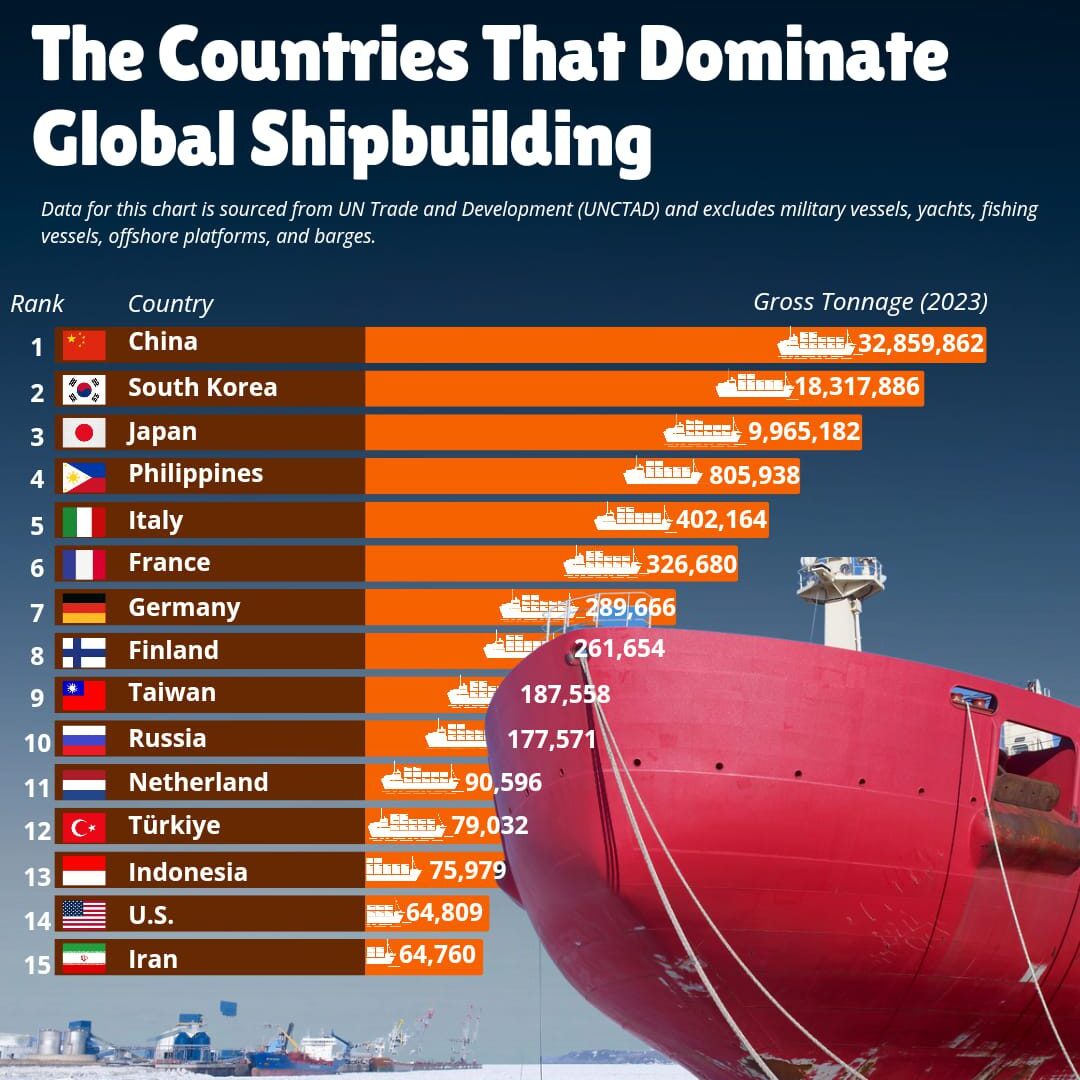
In 2023, the U.S. came 14th on the list of countries that dominated the global shipbuilding in the world, with China leading the group and accounting for 51% of the global tonnage (estimated at 32,859,862 gross tonnage). This indicates that China made about 150 container ships in 2023. The U.S. barely produced 64,809 tonnage (about 0.10%) of the total shipbuilding activities in the world in that year.
The new Trump administration aims to revive the low-performing U.S. shipbuilding and maritime operations by focusing on China, which he has already accused of unfair trade practices that include providing subsidies to shipbuilders worldwide and infringing on others’ intellectual properties.
Possible Widespread Implications of the US Port Fees
Maritime experts foresee a chaotic shipping industry if the U.S. goes ahead to implement its proposed port fee against Chinese-built or Chinese-operated ships. In addition to causing prolonged trade tension between the United States and Chinese, forcing the two superpowers’ allies to take sides, the move will also create operational challenges among shipping alliances. Shipping companies and merchants will avoid using Chinese-built vessels as well as avoiding U.S. ports to save costs.
This could lead to other top shipbuilders like South Korea and Japan, which are U.S. staunch allies, to massively benefit from the trade conflict between the U.S. and China. More importantly, some European shipbuilders or shipowners who have their vessels built by Chinese shipbuilding companies will be broadly affected by the new U.S. port fees. Some European shipbuilders have even received loans and/or subsidies from the Chinese government, putting into the basket of shippers that could be upended by the U.S. new approach.
Since 2000, it has been reported that Greek shipowners bought or ordered more than 1,500 ships from Chinese shipbuilding companies, estimated to be worth over $70 billion. In 2023 alone, Greek shipowners ordered a total of 162 new ships from China, accounting for approximately 61% of their total orders for new ships for the year.
How Trump’s Trade War Can Stymie the Shipping Industry in 2025
President Trump’s tariffs on goods imported from China (20%), the European Union and others are estimated to affect well over $1 trillion worth of goods being moved by U.S. trading partners.
Ship Nerd
In its weekly report, Greece-based Xclusiv Shipbrokers indicated that the Greek shippers’ current fleet data and orderbook trends reveal an ever-increasing exposure to Chinese shipbuilding, most especially in the bulk carrier and general cargo sectors (mainly for vessels above 10,000 dwt.) As revealed by Xclusiv Shipbrokers, 43% of the Greek-owned fleet was constructed in China, while 80% of its current dry bulk order book has Chinese shipyards’ involvement. As a matter of fact, Greek shipowners currently have a new building programme for 168 bulk carriers, with about 135 of them being built in China.
Xclusiv Shipbrokers also reckoned that the Greek container sector exhibits the most dependence on Chinese shipbuilding, with nearly 30% of its current fleet built in China, while 100% of its order book (46 vessels) is under construction across Chinese major shipyards.
Although the trend is slightly less for the tanker sector, but Xclusiv Shipbrokers’ data reveals that 26% of the Greek-owned active fleet was constructed by Chinese shipbuilders. In a similar way, 216 of the 288 tankers (75%) currently on Greek order are being built in China. However, the gas carrier sector is likely to be least affected by the US port fee, if implemented. This is because only 4% of the existing Greek-owned gas carrier fleet was constructed in China, while Chinese-built tonnage represents only 7% of the Greek LNG/LPG orderbook (seven out of 100 vessels).
Prominent Greek shipowner, Harry Vafias believes that the planned US port fees will possibly lead to a two-tier market, whereby vessels constructed by South Korean and Japanese shipbuilders would experience increased demand and higher valuations at the expense of Chinese-built ships. Therefore, the Vafias Group, controlling 94 vessels, all built outside China, expects to survive the financial impact of the US port fee when implemented.
Shipping experts believe that the existing global maritime sustainability efforts may be undermined as some shippers avoid having anything to do with Chinese vessels and U.S. ports, an issue that can result in longer shipping routes and an increase in carbon emissions.
Is it illegal for the US to impose Port Fees on foreign ships?
This is a complex issue that may require sensitive interpretations of several international laws to fully confirm whether it is legal or not for the United States to unilaterally take such an action against Chinese interests.
However, the World Trade Organization (WTO) is clear on its charter for international trade laws and agreements among nations. While WTO permits countries to impose tariffs and fees to safeguard their domestic economies, it does frown at any act of trade discrimination or breaching trade agreements without following the due process of mutual negotiations.
On its part, the United States cited Section 301 of its Trade Act of 1974 to justify its planned imposition of port fees. In principle, the Trade Act of 1974 grants the U.S. President and the United States Trade Representative (USTR) the power to singlehandedly take necessary trade action against foreign trade practices that are considered unfair, discriminatory, or in violation of trade agreements. Therefore, the US president can choose to impose tariffs, sanctions, or other punitive measures to handle unfair trade activities engaged in by any US partners.
If China takes a retaliatory stance on this issue, it may have a serious impact on global maritime operations.

New Empty Container Fee from US Ports
The US ports introduce a new empty container fee for long-dwelling to tackle the thriving supply chain crisis.
Ship Nerd
How certain is the US shipbuilding revival?
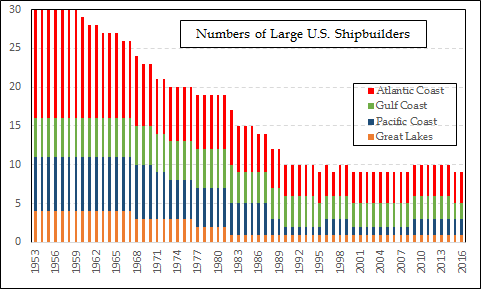
While the idea of reviving the moribund US shipbuilding market seems very ambitious, there are obviously some challenges that must be overcome to achieve this. Historically, for about 64 years since Eisenhower was the President, the number of U.S. shipyards that are capable of constructing deep-draft, self-propelled, oceangoing naval and/or merchant ships of about 400 feet in length reduced from 30 to 6 and the amount of vessels they built each year has gone down from 60 to 7.
As a matter of fact, the number of big yards is now technically 9 but 3 of them are not active in the market. There has been a significant decline in the US shipbuilding industry between 1953 and 2016 year-on-year, and this continues till today.
Reviving the United States shipbuilding industry will require a lot of effort from the US government as well as from the US shipbuilders themselves. They need to combat the high costs of construction and solve the perennial logistical challenges. This may be done by increasing the level of funding for shipbuilding operations, developing a capable workforce that can bring about the expected turnaround, and spur large-scale domestic production. While the proposed Trump administration’s port fee may help jumpstart US shipbuilding aspiration, hence the industry production level will take some time before it can rival that of China.
Takeaways
When implemented, the US port fees will eventually create a two-tier market where shippers and merchants flock to utilize South Korean and Japanese vessels while rejecting China-built ships. This event is expected to significantly disrupt global shipping activities, possibly leading to long shipping routes, higher shipping costs, port congestion, and financial ruin for shipowners whose vessels were built in Chinese shipyards.
See Also

Shipyard Output Reaches a New 7-Year High
After a 10-year fall, the shipyard output started to pick up in Q1 reaching a 7-year quarterly high. Projecting a 15% y-o-y increase for 2024.