24 October 2026

The Fallouts from the New U.S. Oil Sanctions on the UAE Network & Chinese Terminal
To frustrate Iranian oil shipments, the U.S. imposed oil sanctions on UAE and Chinese collaborators, causing consequences on the global market.
To frustrate Iranian oil shipments, the U.S. turned its focus on UAE-based and Chinese collaborators with oil sanctions, but the unfortunate move has so far caused consequences for the global energy market.
Table of Contents
Iranian Oil Sanctions
The United States continue to exert economic pressure on Iran with the aim of restraining the Islamic Republic from influencing and supporting those the successive U.S. governments have labelled “terrorist groups”, including Hezbollah and Houthi rebels in Yemen. With their heinous attacks on commercial vessels in the Red Sea and Bab el-Mandeb Strait, the Houthi rebels, in particular, have frequently disrupted the global maritime operations using sophisticated weapons such as missiles and military drones believed to have been supplied to them by Iran.
The Trump Administration hopes to restrict Iran’s access to financial resources through the sale of its oil, a move that the Washington strategists believe will discourage Iran from developing its Nuclear Programs and compel the Regime to respect previous International Agreements on the issue.
However, the U.S. oil sanctions on Iranian exports have disrupted the global oil supply chain and caused ripple effects in the oil market, as the prices of oil increased by as much as 2-3% since the oil sanctions went into effect. [1]
The UAE Shadow Fleet
The U.S. Department of Treasury recently sanctioned two UAE-based shipping companies, Prime Tankers LLC and Glory International FZ-LLC, both owned by Jugwinder Singh Brar, an Indian national. The oil sanctions affect his fleet of nearly 30 vessels that have allegedly been used to transport Iranian oil on different occasions. It was noted in one operation that Brar’s vessels were used for the shipment of over 25,000 metric tons of petroleum products from Iran’s Bandar Abbas Port to Oman and the UAE.
There were additional reports of the UAE-based “Shadow Fleet” first transporting petroleum from Iran to Iraq’s Khor al-Zubair Port, to mix it with the Iraqi oil and then forging documents that claimed that the oil shipments actually originated from Iraq.
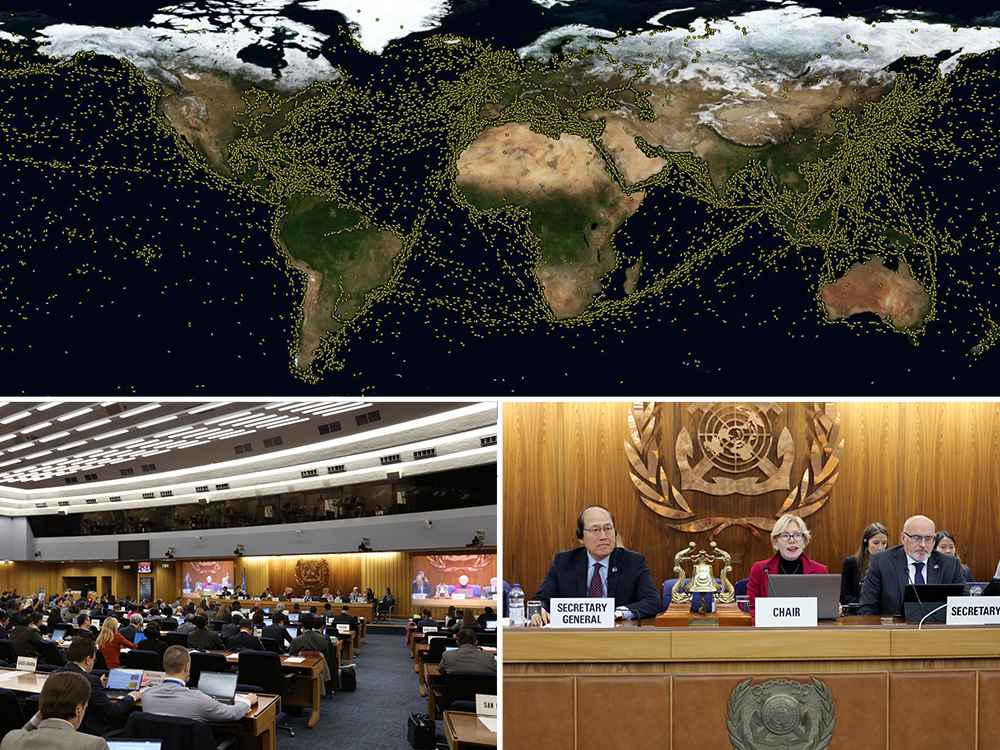
Dark Fleet Alert – LEG 110 Overview
The IMO Legal Committee LEG 110 discussed the alarming rise of ship-to-ship transfers and the dangers posed by tankers in the “dark fleet.”
Ship Nerd
This shadow fleet reportedly engaged in certain evasive tactics, such as manipulating (spoofing) AIS systems to hide vessels’ actual locations and implementing dangerous Ship-to-Ship (STS) transfers. For instance, in 2023, NADIYA, one of the ships operated by Glory International FZ-LLC, illegally helped Iranian military exported oil from an Iranian port. [2]
According to the International Energy Agency (IEA) April Oil Market Report, Iran’s oil supply volume fell slightly in March, 2025 compared to February, 2025. This sudden disruption in Iran’s oil shipments, together with other geo-political tensions, caused the price of WTI Crude Oil (USOIL) to spike to $64.18 per barrel, shortly after the oil sanctions were made public. [3] [4]
OPEC+ Crude oil production
Million barrels per day
| Country | Feb 2025 Supply | Mar 2025 Supply | Sustainable Capacity | Eff Spare Cap vs Mar |
| Iran | 3.39 | 3.29 | 3.8 | |
| Libya | 1.24 | 1.2 | 1.23 | 0.03 |
| Venezuela | 0.97 | 0.92 | 0.89 | 0 |
It is estimated that oil sanctions currently impact around 9% of the global tanker fleet, with Aframax ships being the hardest hit. Some Greek-owned vessels that operate under the umbrella of “Dark Fleet” have also been sanctioned by the US, UK, and EU for engaging in oil sanctioned trades. A certain number of Greek tankers have helped Russia export its crude oil to places like India and Turkey, flouting Western restrictions. As a matter of fact, some published reports claimed that Russian crude oil transported by Greek shippers reached a 12-month high in February 2025. [5] [6]
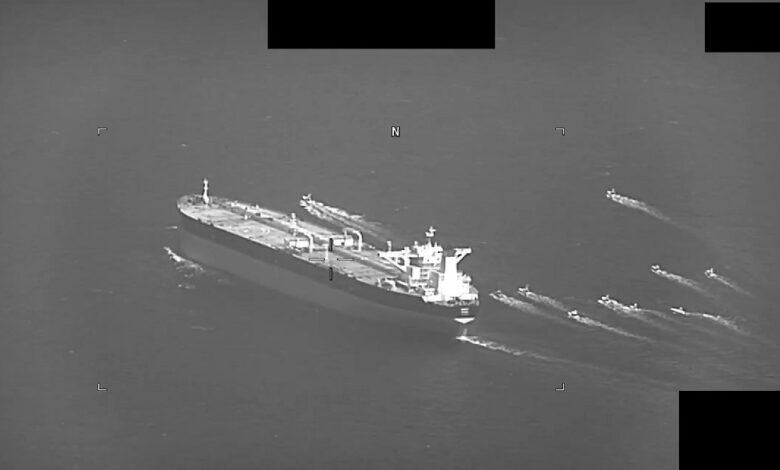
Iran seized 2 tankers in a week targeting US-Greece
Forces of Iran have seized 2 oil tankers. The one in the Strait of Hormuz, the second such incident in less than a week.
Ship Nerd
Sanctioning the Chinese Oil Terminal to Frustrate Iranian Oil Shipments
The U.S. oil sanctions on China-based Guangsha Zhoushan Energy Group Co, LTD, which operates a crude oil terminal on Huangzeshan Island in Zhoushan, was a direct attempt by the Trump Administration to disrupt the transportation of Iranian crude oil to the facility. The terminal is linked to an independent refinery known as a “teapot” plant. And between 2021 and 2025, the terminal had obtained oil from Iran in about 9 times, processing a total of 13 million barrels of Iranian petroleum. [7]
Due to the U.S. oil sanctions, Iran’s currency fell to its lowest value since the mid-2024, and was exchanged for 1,039,000 Iranian rial (IRR) to a U.S. dollar. This unfortunate event has produced unforeseen inflationary consequences in Iran, forcing the government to dip its hand into its currency reserves to stabilize its local market and economy. [8]
The Way Forward
Representatives from the U.S. and Iran have been negotiating these past weeks to resolve Iran’s nuclear issue, with the next meeting scheduled for April 26 in Oman, but experts believe the two parties’ demands to reach a compromise, are still oceans apart.
If Iran fails to seal a deal with its American counterpart, it risks a military offensive with the U.S. as the Trump Administration already ordered the deployment of battle-ready U.S. troops to the Middle East. Any military operations in the region will further undermine and disrupt the stability of the global oil market in 2025.
Takeaways
Shippers worldwide should brace themselves for surprises if the US-Iran nuclear talks fail. It is time they set up business continuity plans that can help them survive such a destabilizing development if all hell is let loose.
See Also
How Trump’s Tariffs Can Stymie the Shipping Industry in 2025
President Trump’s tariffs on goods imported from China (20%), the European Union and others are estimated to affect well over $1 trillion worth of goods being moved by U.S. trading partners.