24 October 2026

Why Kamsarmax Vessels Are Now Prefered By Shippers Globally
Kamsarmax vessels are recently being preferred from many shippers worldwide because of their comparative efficiency, performance, and ROI.
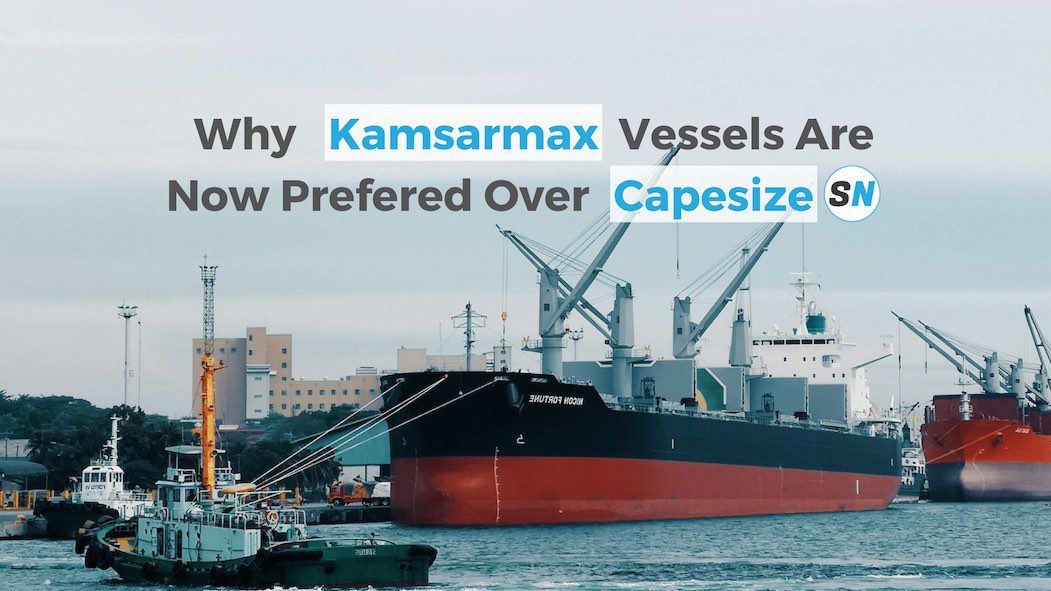
Kamsarmax vessels have recently become the preferred choice for many global shippers due to their optimal fuel efficiency, versatile design, and strong performance. Specifically engineered to maximize cargo capacity while adhering to the dimensional restrictions of ports like Kamsar in Guinea, these bulk carriers offer an excellent return on investment (ROI), making them a strategic asset in modern maritime logistics.
Table of Contents
The issues Against Capesize bulk vessels
Traditionally, shippers around the world previously utilized Capesize bulk carriers to transport coal and iron ore, but there has been a tremendous volatility in Capesize rates that eventually affects its rate of utilization as explained below:
Pressure from low freight rates
Shippers have moved from using Capesize vessels to other bulk carriers like Kamsarmax vessels for major routes, causing the demand for Capesize bulk carriers to decline significantly. Therefore, the low freight rates do not seem appealing to most shippers, therefore causing them to abandon Capesize for Kamsarma vessels.
Fluctuations in iron ore and coal demands
There have been reports of overshipment or oversupply of coal and iron ore from Brazil to China, leading to a sharp drop in the demand for the commodities due to iron ore surplus. China, on the other hand, has chosen to diversify its iron ore sources from Brazil and Australia, focusing on and investing in African mines. The falling Baltic Capesize Index reveals a downward trend for the demand of Capesize vessels.
Limited to specific routes
Now, Capesize vessels are mainly used to transport bauxite shipments from West Africa to China, experiencing fewer shipments over a long period of time.
Some economic and environmental reasons shippers are transitioning to Kamsarmax
As a result of the important factors mentioned above and others described in the following, Karmarmax bulk carriers are being used instead of Capesize on major shipping routes:
Versatility
Kamarmax vessels, which are usually around 82,000 DWT, when loaded with cargo, are more accessible to more ports because of their smaller structures or optimized design. They can enter shallower terminals and ports that bigger bulk carriers like Capesize cannot berth at. Certain regions that have infrastructure limitations that can prevent bigger vessels like Capesize to dock are usually receptive to Kamarmax vessels, therefore making them more accessible to several ports in Latin America, India, and Southeast Asia. Interestingly enough, Kamarmax can smoothly pass through the Panama Canal, which is structurally difficult for Capesize to achieve, therefore causing Capesize vessels to navigate longer routes.
Fuel efficiency
Kamsarmax vessels are fuel-efficient in the sense that they are designed to optimize fuel consumption. Their hulls are built to reduce resistance, resulting in lower full consumption per ton-mile. Kamsarmax bulk carriers are constructed in a way that they comply with strict environmental requirements/standards under the EEDI Phase 3 regulations and NOx-Tier III regulations, resulting in lower greenhouse gas emissions. Some models of Kamsarmax vessels are capable of achieving more than 30% in fuel consumption reduction, making them suitable for modern shipping.
Increased investment in Kamsarmax
Major shipping companies are investing in new Kamsarmax builds, which indicates a rising trend in the adoption of Kamsarmax bulk carriers. On record, the Greek shipper, Diana Shipping Inc., has reportedly signed contracts for two 81,200 DWT methanol dual-fuel Kamsarmax vessels, which are expected to be delivered between 2027 and 2028.
Tsuneishi Shipbuilding, a Chinese shipbuilder, has purportedly received an order for the world’s first methanol-fueled Kamsarmax bulk carriers from the Japanese shipping company Mitsui & Co., with a delivery date slated for late 2025. These vessels incorporate wind resistance reduction technology to further improve fuel efficiency. Similarly, China-based COSCO Shipping announced a partnership with Everbright Financial Leasing to build ten new Kamsarmax vessels in conjunction with its larger fleet expansion strategy.
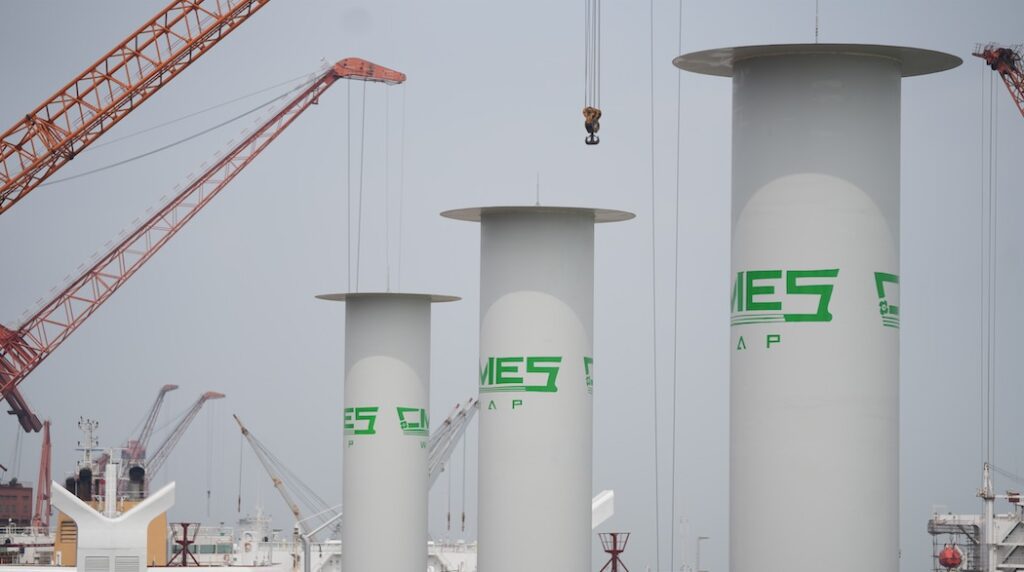
Largest Wind Assistant Rotors Deal for 6 VLOCs
CMES-Tech signed a mega deal to supply high-tech Wind Assistant Rotors for six 325,000DWT VLOC owned by Shandong Shipping Corporation.
Ship Nerd
The major headaches shippers have about Kamsarmax
Despite its rising popularity and impressive performance, there are some drawbacks that come with adopting Kamsarmax vessels that some shippers are bent on avoiding by all means.
The costs of acquiring & running a fleet of Kamsarmax vessels
The prices of Kamsarmax vessels vary depending on shipyard location, specifications, and efficiency features. However, a standard Kamsarmax newbuild costs anywhere from $30 to $40 million, while secondhand Kamsarmax vessels can go for as high as $20 or $30 million. Those Kamsarmax vessels that run on methanol or are powered by LNG can cost about 10-20% more. These rates have been steadily climbing for several years, making it too expensive for small-to-medium shippers to afford.
Volatility in Freight Rate
Since most Kamsarmax bulk carriers are used to transport seasonal commodities such as grains, coal, and others, it is practically difficult for shippers to secure agreements for long charters from merchants.
Port Restrictions
It is important to state that, like Capesize vessels, Kamsarmax still face certain port restrictions, most especially in regions where the ports are quite shallow. To make this situation worse, shippers that own Kamsarmax vessels are still facing competition from other smaller bulk carriers such as Supramax and Ultramax bulk carriers that can easily access those very shallow ports. Since most Kamsarmax vessels require port infrastructure for loading and offloading, these procedures may result in port delays at terminals where there are limited numbers of cranes.
Takeaways
Kamxarmax bulk carriers give shippers a more efficient and high-performing alternative to Capesize vessels. As the adoption rate of Kamsarmax increases, shippers worldwide will have to grapple with the other challenges of managing a fleet of Kamsarmax vessels.
Source: Avexnav
See Also
A potential loophole in the EU ETS
Queseas has published an article focusing on the side effects of the inclusion of shipping in the EU Emissions Trading System (EU ETS).